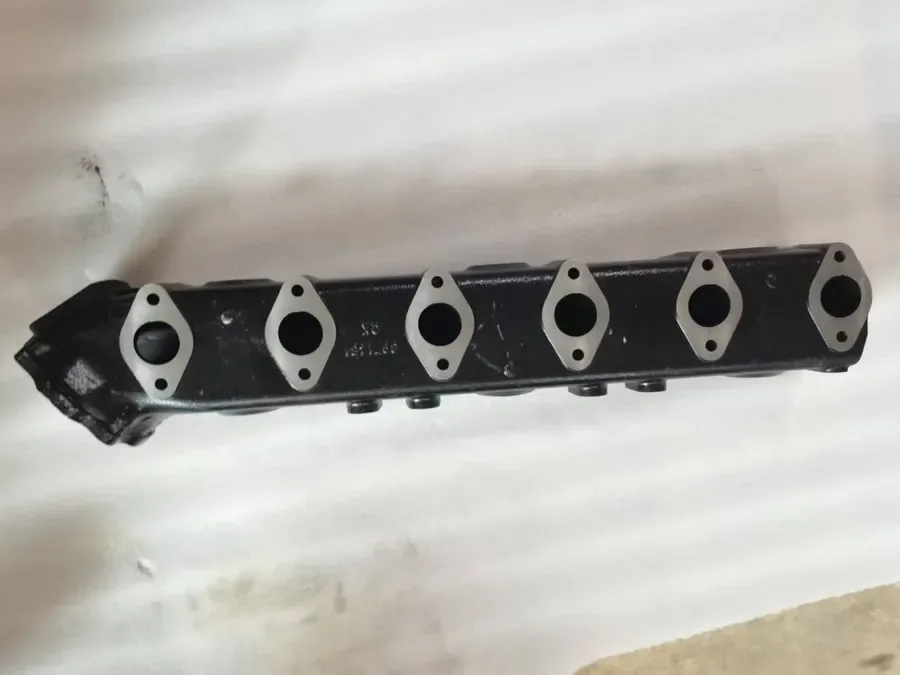
3971431 5446704 3971505 Exhaust Manifold – Diesel Engine
- Part numbers
- 397143154467043971505
Find 3971431, 5446704 and 3971505 exhaust manifold parts for diesel engines. Contact Al Busharah INTL UAE for compatibility, availability and pricing.
Description
3971431 5446704 3971505 Exhaust Manifold – Diesel Engine Exhaust System Component
The 3971431 Exhaust Manifold, listed alongside reference numbers 5446704 and 3971505, is an engine exhaust system component designed to collect exhaust gases from engine cylinders and direct them toward the downstream exhaust system.
Exhaust manifolds are important components in diesel engine operation, helping route combustion gases away from the cylinder head and toward the turbocharger or exhaust outlet, depending on the engine configuration.
Al Busharah INTL supplies diesel engine spare parts, exhaust system components and heavy equipment replacement parts in the United Arab Emirates.
Customers searching for 3971431 Exhaust Manifold, 5446704 Exhaust Manifold or 3971505 Exhaust Manifold can contact Al Busharah INTL for product availability, technical information and quotations. Product Specifications
Primary Part Number: 3971431
Additional Listed References: 5446704, 3971505
Product Name: Exhaust Manifold
Product Type: Diesel Engine Exhaust System Component
Component Category: Engine Exhaust Manifold
Primary Function: Exhaust Gas Collection and Routing
Engine Compatibility: Requires Manufacturer Verification
Manufacturer: Requires Verification
Material: Requires Verification
Mounting Configuration: Requires Verification
Exhaust Port Arrangement: Requires Verification
Turbocharger Connection: Requires Verification
Gasket Requirements: Requires Verification
Supplier: Al Busharah INTL
Location: United Arab Emirates
Availability: Contact for Stock and Pricing
What Is an Exhaust Manifold?
An exhaust manifold is an essential component of an internal combustion engine's exhaust system.
It collects exhaust gases produced during combustion and directs them from the cylinder head exhaust ports into the downstream exhaust system.
In turbocharged diesel engines, the exhaust manifold may route exhaust gases toward the turbocharger turbine.
The turbine uses energy from the exhaust gases to drive the turbocharger compressor, helping supply compressed intake air to the engine.
The design of an exhaust manifold depends on engine configuration, operating temperatures, exhaust flow requirements and mounting arrangements.
The 3971431 Exhaust Manifold should be selected only after verifying its compatibility with the applicable engine model and serial number. Functions of an Engine Exhaust Manifold
Exhaust manifolds perform several important functions:
Collect exhaust gases from engine cylinders.
Direct exhaust gases toward the exhaust outlet.
Route exhaust flow to the turbocharger where applicable.
Support proper exhaust gas movement.
Withstand high operating temperatures.
Provide a connection between the cylinder head and exhaust system.
Support correct exhaust system installation.
Help maintain exhaust system sealing.
Direct combustion gases away from the engine.
Support engine exhaust system operation.
Help maintain the designed exhaust flow path.
Provide mounting points for associated exhaust components.
Correct manifold selection and installation are important for reliable engine operation. How an Exhaust Manifold Works
An exhaust manifold collects combustion gases discharged from the engine cylinders. 1. Exhaust Valve Opening
After combustion, the engine exhaust valves open during the exhaust stroke. 2. Exhaust Gas Discharge
High-temperature exhaust gases leave the combustion chambers through the cylinder head exhaust ports. 3. Gas Collection
The exhaust manifold collects gases from the individual exhaust ports. 4. Exhaust Gas Routing
The manifold channels exhaust gases toward the designated exhaust outlet. 5. Turbocharger Operation
On turbocharged engines, exhaust gases may pass through the turbocharger turbine. 6. Exhaust System Discharge
The gases continue through the remaining exhaust system components. 7. Continuous Operation
The process repeats during normal engine operation.
The exact exhaust gas routing arrangement depends on the engine design. Applications of Diesel Engine Exhaust Manifolds
Exhaust manifolds are commonly used in various diesel engine applications.
General applications include:
Heavy-duty diesel engines.
Industrial diesel engines.
Construction equipment engines.
Agricultural machinery engines.
Diesel generator engines.
Commercial vehicle engines.
Marine diesel engines.
Heavy equipment engines.
Industrial power generation systems.
Engine repair workshops.
Diesel engine overhaul operations.
Exhaust system maintenance.
Turbocharged diesel engine systems.
Industrial machinery maintenance.
Engine rebuilding applications.
Important: These are general exhaust manifold applications and do not confirm that part numbers 3971431, 5446704 or 3971505 fit every application listed.
Exact compatibility must be verified against the manufacturer's parts catalogue. Importance of an Exhaust Manifold
The exhaust manifold plays a significant role in engine exhaust gas management.
Diesel engines generate high-temperature gases during fuel combustion.
These gases must be directed away from the engine cylinders through a suitable exhaust system.
The exhaust manifold provides the initial collection and routing path for these gases.
A properly functioning manifold helps maintain the intended exhaust flow and sealing arrangement.
In turbocharged engines, manifold condition can also affect the delivery of exhaust gases to the turbocharger.
Cracks, leaks or damaged mounting surfaces may disrupt exhaust flow and contribute to reduced engine performance.
Correct exhaust manifold selection and installation are therefore important for reliable diesel engine operation. Common Causes of Exhaust Manifold Failure
Exhaust manifolds operate under demanding thermal and mechanical conditions.
Common causes of damage include:
Repeated heating and cooling cycles.
Thermal fatigue.
Excessive exhaust temperatures.
Engine vibration.
Improper installation.
Incorrect mounting bolt torque.
Damaged manifold gaskets.
Corrosion.
Excessive mechanical stress.
Poor mounting alignment.
Exhaust system restrictions.
Damaged exhaust connections.
Loose mounting fasteners.
Material fatigue.
Engine overheating.
Improper exhaust system support.
Excessive thermal expansion stress.
Prolonged operation under abnormal conditions.
Incorrect replacement components.
Inadequate maintenance.
The actual failure mechanism depends on the manifold material, engine design and operating conditions. Symptoms of a Damaged Exhaust Manifold
Possible symptoms of exhaust manifold problems include:
Exhaust gas leakage.
Unusual exhaust noise.
Ticking or hissing sounds near the manifold.
Visible cracks.
Damaged mounting surfaces.
Exhaust soot around gasket connections.
Exhaust odors near the engine.
Reduced engine performance.
Turbocharger performance problems where applicable.
Loose exhaust connections.
Damaged exhaust manifold gaskets.
Excessive exhaust system noise.
Abnormal exhaust temperature readings.
Broken mounting studs.
Visible heat-related damage.
These symptoms may also be caused by other exhaust system faults.
A qualified technician should inspect the exhaust system before replacing the manifold. How to Select the Correct Exhaust Manifold
Before purchasing a replacement exhaust manifold, verify:
Engine manufacturer.
Engine model.
Engine serial number.
Original exhaust manifold part number.
Manufacturer-approved replacement references.
Cylinder head exhaust port arrangement.
Exhaust manifold mounting configuration.
Exhaust outlet position.
Turbocharger connection type, where applicable.
Exhaust flange dimensions.
Mounting bolt arrangement.
Gasket requirements.
Manifold material specifications.
Engine application.
Exhaust system configuration.
Temperature requirements.
Associated mounting hardware.
Engine service manual instructions.
Existing manifold dimensions.
Manufacturer compatibility confirmation.
The references 3971431, 5446704 and 3971505 must be checked for interchangeability before ordering. Exhaust Manifold Installation Recommendations
Exhaust manifold replacement should be carried out by a qualified technician.
General installation recommendations include:
Allow the engine to cool completely.
Follow appropriate engine isolation procedures.
Remove associated exhaust connections carefully.
Inspect the existing exhaust manifold.
Check the cylinder head mounting surface.
Remove old gasket material.
Inspect mounting studs and bolts.
Verify the replacement manifold part number.
Check manifold mounting alignment.
Use manufacturer-approved gaskets.
Follow the correct tightening sequence.
Apply manufacturer-specified torque values.
Reconnect associated exhaust components.
Inspect exhaust system supports.
Check for exhaust leaks after installation.
Monitor engine operation during testing.
Follow the applicable engine service manual.
Incorrect installation may cause exhaust leakage, mounting damage or premature manifold failure. Maintenance of Diesel Engine Exhaust Manifolds
Regular inspection helps identify potential exhaust system problems.
Recommended practices include:
Inspecting the manifold for cracks.
Checking exhaust gasket connections.
Monitoring exhaust leakage.
Inspecting mounting bolts.
Checking exhaust flange connections.
Monitoring unusual engine noises.
Inspecting heat-related damage.
Checking turbocharger mounting connections where applicable.
Monitoring engine operating temperatures.
Inspecting exhaust system supports.
Checking for corrosion.
Replacing damaged gaskets.
Investigating abnormal exhaust noise.
Following manufacturer maintenance intervals.
Inspecting the manifold during engine overhaul.
Maintaining the overall exhaust system.
Benefits of a Correctly Specified Exhaust Manifold
A properly selected and installed exhaust manifold supports:
Correct exhaust gas routing.
Reliable exhaust system connections.
Proper exhaust gas collection.
Suitable exhaust system sealing.
Consistent exhaust flow.
Reliable turbocharger gas delivery where applicable.
Correct cylinder head integration.
Reduced risk of exhaust leakage.
Improved exhaust system serviceability.
Reliable engine operation.
Correct exhaust component alignment.
Proper exhaust system installation.
Reduced risk of premature component damage.
Effective exhaust gas management.
Long-term engine maintenance planning.
Actual performance depends on correct fitment, installation and operating conditions. Why Choose Al Busharah INTL?
Al Busharah INTL supplies diesel engine spare parts and heavy equipment replacement components in the UAE.
Our product range includes:
Engine exhaust manifolds.
Turbocharger components.
Cylinder heads.
Engine gaskets.
Pistons and piston rings.
Crankshaft components.
Main bearings.
Connecting rod bearings.
Engine oil pumps.
Cooling water pumps.
Fuel injection components.
Engine sensors.
Industrial machinery spare parts.
We assist customers with spare parts enquiries, part number identification and product sourcing requirements. Order 3971431 Exhaust Manifold in UAE
Looking for 3971431 Exhaust Manifold, 5446704 Exhaust Manifold or 3971505 Exhaust Manifold?
Contact Al Busharah INTL for product pricing, availability and compatibility information.
When requesting a quotation, please provide:
Required part number.
Engine manufacturer and model.
Engine serial number.
Required quantity.
Existing manifold photographs, if available.
Any relevant manufacturer reference numbers.
Al Busharah INTL can assist with your diesel engine exhaust system spare parts requirements in the United Arab Emirates.
Details
- Category
- Engine
- Brand / fitment
- Cummins
- Availability
- In stock — Sharjah, UAE
- Dispatch
- Sharjah, United Arab Emirates
In stock in Sharjah. Pricing confirmed on enquiry. Same-day dispatch across the UAE, 48-hour regional freight from Sharjah.